

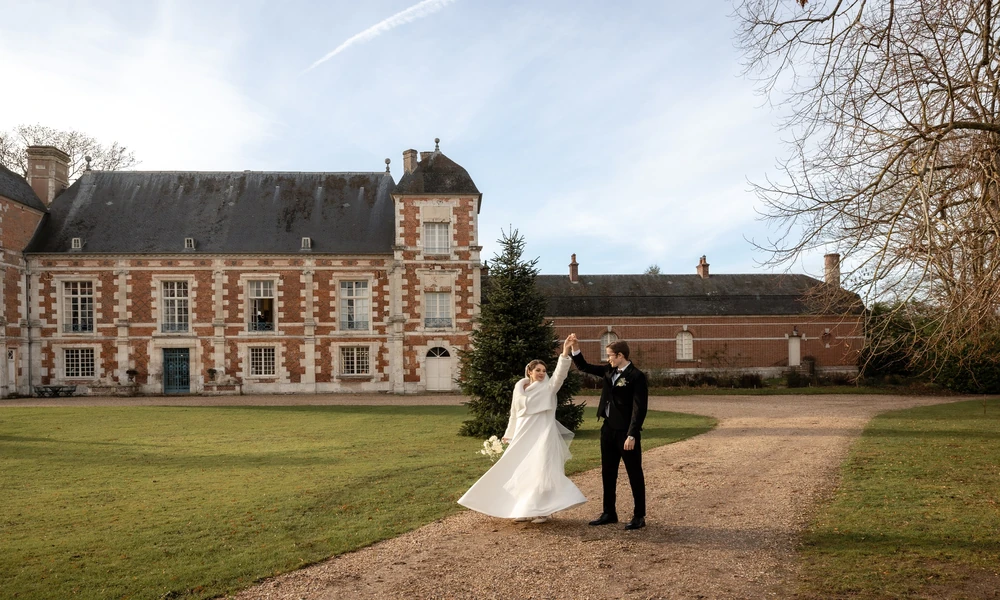
Ask couples who married abroad what they remember most, and the answer is rarely the first dance or the cake. It is the moments in between: the long lunch the day before, the late-night conversation on the terrace, the slow breakfast when nobody wanted to leave.
That is the idea behind the château wedding weekend, a format that has become the standard for destination weddings in France. Instead of asking guests to travel across borders for a single evening, you invite them to share three days together in one place.
Done well, it feels effortless. Done badly, it becomes three days of logistics. Here is how to get it right.
Why a weekend works better than a day
When guests travel internationally for your wedding, they invest time, money and holiday days. A single evening rarely feels like a fair exchange. A weekend does.
It also changes the atmosphere. Guests who arrive on Friday have time to meet each other before the wedding day. By Saturday, your university friends know your cousins, and your two families have already shared a meal. The celebration starts warmer and ends later.
Finally, a weekend takes the pressure off the main day. If you only see someone briefly during the reception, you know you will catch up properly over Sunday brunch.
Start with accommodation, not décor
The single most important decision in a wedding weekend is where everyone sleeps. Before you think about flowers or table linen, ask three questions about any venue:
- How many guests can stay on the estate itself?
- What gîtes, boutique hotels and B&Bs are within 15 minutes?
- Who will organise transport between them, especially late at night?
Many historic châteaux can house a few dozen people, which is ideal for close family and the wedding party. Everyone else stays nearby. Booking these rooms early, ideally as soon as your date is fixed, avoids the classic problem of guests scattered across the region with no way back after midnight.
A shuttle schedule is not glamorous, but it is the difference between relaxed guests and stressed ones.
Friday: the welcome dinner
The first evening sets the tone. It should feel relaxed, generous and clearly different from the wedding day.
Think long tables outdoors, a barbecue or a regional buffet, local cider and a cheese board that does justice to Normandy. Keep the dress code casual and the programme light: a short welcome from the couple, perhaps a toast from the parents, and nothing else scheduled.
This is also the best moment to hand out a small welcome pack: the weekend timeline, shuttle times, a map, the Wi-Fi password and a few local recommendations for anyone arriving early or staying on.
Saturday: the wedding day, French style
A French wedding day has its own rhythm, and international guests usually love it. A typical schedule might look like this:
- Afternoon: getting ready in the château’s period rooms, then a symbolic ceremony in the chapel or garden, around 3 or 4 pm.
- Vin d’honneur: the French version of the cocktail hour, usually longer and more generous, with champagne, canapés, oysters or live cooking stations while the photos are taken.
- Dinner: a seated meal starting around 8 pm, often with several courses. In Normandy, a trou normand, a glass of Calvados or an apple sorbet between courses, is a crowd-pleaser.
- Dessert: many couples choose a pièce montée, the traditional tower of cream-filled choux pastry, instead of or alongside a cake.
- Party: French receptions run late. Dancing until 3 or 4 am is normal, and the late-night snack, sometimes an onion soup in the small hours, is a tradition worth keeping.
Build generous buffers into the timeline. Speeches run long, photos take time, and nobody wants to rush a sunset.
Sunday: the farewell brunch
The last morning is often guests’ favourite part of the weekend. The pressure is gone, the couple is relaxed, and everyone has stories from the night before.
Keep it simple: a late brunch from around 11 am, coffee, pastries, eggs, fruit, perhaps the leftover wedding cake. Some couples add a lawn game, a pétanque tournament or a picnic in the grounds. Schedule it so guests can still catch an afternoon train or ferry, and plan the departure shuttles in advance.
Give guests free time and ideas
A weekend does not mean entertaining guests every minute. People appreciate unstructured time, especially on Saturday morning before the ceremony.
Share a short list of nearby ideas: a market, a walk through the grounds, a local cider farm, a historic town within half an hour. In Normandy, many guests extend their stay to visit Giverny, Rouen, Honfleur or the coast, and a few suggestions make it easy for them.
Budget: where the money goes
A weekend naturally costs more than a single day, but not three times more. The Friday dinner and Sunday brunch are usually simpler, and the venue is often booked for the whole weekend anyway.
The real budget drivers are guest count, catering and accommodation. As a rule of thumb, decide early how much of your guests’ lodging you will cover. Some couples pay for everyone’s rooms; others cover only the wedding party and offer reserved rates for the rest. Either approach works, as long as it is clearly communicated.
Common mistakes to avoid
- Underestimating travel time between accommodation and the venue, especially at night on country roads.
- Overscheduling the weekend so that guests never get a moment to rest.
- Forgetting a wet-weather plan for every outdoor event, not just the ceremony.
- Sending information too late. International guests need dates, travel advice and accommodation details at least 9 to 12 months ahead.
- Trying to coordinate everything yourselves from another country, in another language.
Why a planner makes the difference
A wedding weekend is essentially a small event festival: three meals, dozens of suppliers, guests arriving from different countries and a schedule that depends on all of them. It is perfectly possible to manage alone, but it is rarely relaxing.
Working with an experienced luxury wedding planner in Normandy means someone else handles the shuttles, the caterer’s timing, the rain plan and the late-night taxi requests. You get to do what the weekend is actually for: spending time with the people who travelled to be with you.
Final thoughts
The best wedding weekends do not feel organised. They feel natural, as if everyone simply happened to be in the same beautiful place at the same time. Behind that feeling is careful planning, generous hosting and a clear rhythm for each day. Get those right, and your guests will talk about that weekend in the château for years.